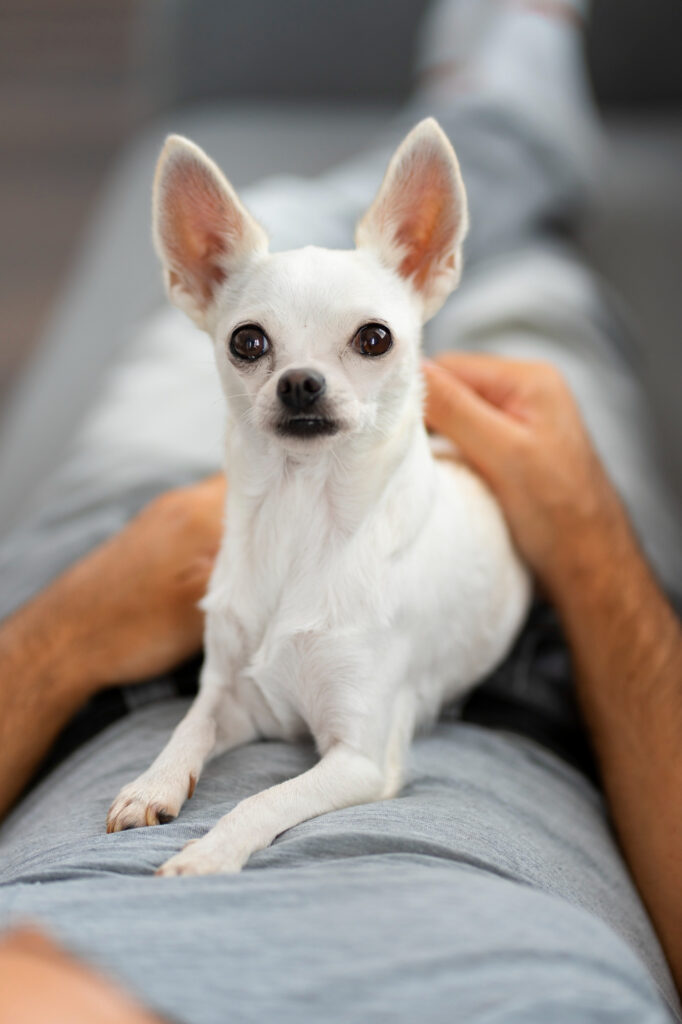
Updated February 2026
Introduction: Finding Your Perfect Pocket-Sized Companion
I still remember the email that arrived at ChihuahuaPupParadise.com on a crisp autumn morning last year. A woman named Patricia from Seattle had attached a photo of herself as a little girl, clutching a tattered dog-eared book about Chihuahuas. “I’ve waited 35 years for this moment,” she wrote. “I want the smallest, most affectionate apricot teacup apple head girl you have. The one who will sleep in the crook of my neck and go everywhere with me.” Eight weeks later, Patricia flew down to meet “Cinnamon,” our stunning 2.3-pound apricot long coat teacup apple head Chihuahua puppy with soulful dark eyes and a coat the color of sunrise. The photo she sent us that night—Cinnamon nestled inside Patricia’s sweater pocket, little pink tongue peeking out—is framed in our office. That’s why we do this.
Welcome to the most comprehensive guide ever written for finding healthy and well socialized chihuahua puppies for sale in 2026. If you’re searching for apricot chihuahua puppies for sale, long coat chihuahua puppies for sale, short coat chihuahua puppies for sale, teacup chihuahua puppies for sale, apple head chihuahua puppies for sale, or AKC registered chihuahua puppies for sale, you’ve just landed in the right place. This isn’t a quick listing site with 500 words and stock photos. This is the masterclass—the resource I wish every potential puppy parent had when I started breeding Chihuahuas fifteen years ago.
At ChihuahuaPupParadise.com, we’ve dedicated our lives to producing only the healthiest, most confident, and most loving Chihuahuas in every variety you can imagine. Our program specializes in those rare and sought-after combinations: the apricot long coat chihuahua with feathering like spun gold, the teacup apple head chihuahua with the perfect dome-shaped skull, and of course, AKC registered apricot chihuahua puppies with pedigrees that trace back to champion bloodlines. We’ve spent over a decade refining our health testing protocols, socialization programs, and genetic selection to ensure every puppy we place is not just adorable, but truly built to thrive.
Why should you trust us? Because we’ve seen too many heartbroken families who bought from puppy mills or backyard breeders who promised “teacup” puppies that ended up with collapsing tracheas, or “rare apricot” puppies that were actually washed-out fawns with health problems. We’ve spent 15 years building a reputation as the gold standard for ethical Chihuahua breeding. Every puppy born at our paradise comes with comprehensive health testing, a two-year health guarantee, and something no other breeder can offer: a lifetime of support from a team that treats every puppy like family.
In this guide, you’ll discover everything you need to know about Chihuahua head types, coat varieties, color genetics, health considerations, and exactly how to identify healthy and well socialized chihuahua puppies for sale that will become your devoted companion for 15+ years. We’ll dive deep into the myths about teacup Chihuahuas (spoiler: they can be perfectly healthy with responsible breeding), the grooming requirements for long coat versus short coat, and why AKC registration matters more than just a piece of paper.
Whether you’re dreaming of a tiny apricot long coat girl to carry in your handbag, a confident short coat apple head boy to be your shadow, or a rare teacup apricot puppy that looks like a tiny fox, you’ll find every answer here. And when you’re ready to welcome your new family member, we’ll be here with open arms and a waiting list of ethically raised, deeply loved puppies.
Let’s begin this journey together.
The Chihuahua Breed – History, Temperament & Why They Make Perfect Companions
A Rich History: From Ancient Mexico to Modern Hearts
The Chihuahua’s origin story reads like an archaeological mystery. Most experts agree these tiny dogs descended from the Techichi, a companion dog favored by the Toltec civilization in Mexico as early as the 9th century. When the Aztecs conquered the Toltecs, they adopted the Techichi, believing these small dogs possessed mystical powers—guiding souls through the afterlife and bringing good fortune to their owners. Carvings and effigies from ancient pyramids show dogs remarkably similar to today’s Chihuahuas, complete with the distinctive apple head shape and large luminous eyes.
The modern Chihuahua as we know them emerged from the Mexican state of Chihuahua in the mid-1800s, where American tourists discovered these tiny treasures and began bringing them across the border. The American Kennel Club officially recognized the breed in 1904, and since then, the Chihuahua has become an icon—not just as a celebrity accessory (though they do love a good handbag), but as one of the most loyal, intelligent, and adaptable companion breeds on earth.
Temperament: Big Dog Energy in a Tiny Package
If you’ve never lived with a Chihuahua, prepare for a surprise. These aren’t fragile lapdogs who do nothing but sleep. Chihuahuas possess the heart of a terrier, the loyalty of a German Shepherd, and the confidence of a Rottweiler—all compressed into a body small enough to fit in a purse. We often tell our families at ChihuahuaPupParadise.com: “Your Chihuahua doesn’t know he’s small, and frankly, he doesn’t care.”
Loyalty Beyond Measure
A well-bred, properly socialized Chihuahua bonds intensely with their person. They’ll follow you from room to room, curl up on your chest while you watch TV, and greet you at the door with the enthusiasm usually reserved for much larger dogs. This devotion creates a connection that many owners describe as soul-deep. One of our clients, a retired veteran named George, says his apricot short coat boy, Bandit, saved his life by alerting him to a gas leak in his home at 3 AM—something a larger, less vigilant dog might have missed.
Intelligence and Trainability
Chihuahuas rank surprisingly high in canine intelligence. They’re quick learners, though they do have an independent streak. (We prefer the term “selective hearing.”) With positive reinforcement methods—lots of tiny treats and enthusiastic praise—our puppies master house training, basic commands, and even impressive tricks. At our paradise, we begin cognitive development exercises at three weeks old, setting the foundation for confident, trainable adults.
Alertness and Protective Instincts
That big bark coming from a tiny dog? It’s not noise—it’s communication. Chihuahuas make excellent watchdogs, alerting you to visitors, strange sounds, or anything amiss. They’re naturally suspicious of strangers (a trait bred into them as companion guardians), which is why our extensive socialization protocol is so critical. A well-socialized Chihuahua knows the difference between a genuine threat and the mailman.
Affectionate but Not Needy (When Raised Right)
Many people assume Chihuahuas are “velcro dogs” who can’t be left alone. While they do crave human companionship, a confident, well-adjusted Chihuahua from a program like ours can entertain themselves with toys and settle happily while you’re at work. The key is building independence early—something we prioritize through our Bio Sensor stimulation and gradual alone-time exercises.
Why Chihuahuas Excel in Modern Lifestyles
Apartment and City Living
In a world of shrinking living spaces, Chihuahuas are the ultimate urban companions. They require minimal space, can be exercised indoors during bad weather, and are quiet enough (when properly trained) to be model neighbors. Their small size means they’re easily carried on public transportation, into pet-friendly stores, and even on airplanes in compliant carriers.
Seniors and Retirees
For older adults seeking companionship without the physical demands of a large breed, Chihuahuas are ideal. They don’t require long walks (though they enjoy them), they’re easy to lift and groom, and their affectionate nature combats loneliness. We’ve placed countless puppies with seniors who report their Chihuahua gives them renewed purpose and daily joy.
Families with Older Children
While we don’t recommend Chihuahuas for homes with very young toddlers (the size difference poses accidental injury risks), they thrive with considerate older children who understand gentle handling. Our puppies are raised in a busy home environment with children of various ages, so they’re accustomed to normal household activity and respectful kids.
First-Time Dog Owners
Because of their manageable size and moderate exercise needs, Chihuahuas make excellent first dogs—provided the owner is committed to proper training and socialization. We guide our first-time families through every step, from housebreaking techniques to nutrition choices, ensuring success.
Travel Enthusiasts
Dreaming of an RV trip or frequent flights? Chihuahuas are portable companions who adapt quickly to new environments. Many of our puppies have visited dozens of states by their first birthday, happily exploring from the safety of a carrier or stroller.
The Chihuahua’s adaptability, intelligence, and profound loyalty explain why they’ve remained one of America’s most popular breeds for over a century. But not all Chihuahuas are created equal. The differences in head shape, coat type, size, and color create distinct varieties—each with its own characteristics and care requirements. In the next sections, we’ll explore these variations in depth so you can choose the perfect match for your lifestyle.
Ready to meet our current litter of confident, loving Chihuahua puppies? View our available puppies at ChihuahuaPupParadise.com →
Understanding Chihuahua Head Types: Apple Head vs Deer Head
One of the first decisions you’ll make when searching for healthy and well socialized chihuahua puppies for sale is choosing between an apple head and a deer head. This distinction dramatically affects appearance, and to some extent, health considerations. At ChihuahuaPupParadise.com, we specialize exclusively in true apple head Chihuahuas—the breed standard preferred by the AKC and beloved for that classic “baby face” expression. But let’s explore both types objectively.
The Apple Head Chihuahua: The Breed Standard
The apple head Chihuahua gets its name from the rounded, dome-shaped skull that resembles—you guessed it—an apple. This is the head type specified in the AKC breed standard and the look most people envision when they think “Chihuahua.”
Defining Characteristics of Apple Head Chihuahuas:
- Domed Skull: The most prominent feature is a well-rounded, apple-dome skull that’s broader than it is deep
- Defined Stop: A pronounced 90-degree angle where the muzzle meets the forehead
- Short Muzzle: Typically about 1-1.5 inches long, creating that “baby face” appearance
- Large, Expressive Eyes: Set wide apart, luminous and full of personality
- Small Ears: Set at a 45-degree angle, flaring to the sides when alert
- Possible Molera: Many apple heads have a soft spot on the top of the skull (molera) that may close with age, similar to a human baby’s fontanel
Why We Love Apple Heads:
At our paradise, we’re unabashed apple head enthusiasts. That domed skull and shortened muzzle create the endearing expression that melts hearts. Beyond aesthetics, apple heads typically have better dentition (less crowding), fewer breathing issues than extremely short-faced breeds, and that classic “Chihuahua look” that never goes out of style.
The Deer Head Chihuahua: Elegant and Refined
Deer head Chihuahuas, while not meeting the AKC breed standard, have their own devoted following. Named for their resemblance to a young deer, these dogs have a more elongated head shape.
Defining Characteristics of Deer Head Chihuahuas:
- Flatter Skull: Less pronounced dome, more sloping forehead
- Gentle Stop: A gradual slope rather than a sharp angle between forehead and muzzle
- Longer Muzzle: Typically 2 inches or more, giving a more fox-like appearance
- Larger Ears: Often set lower on the head and more upright
- Leaner Build: Usually taller and lankier than their apple head counterparts
The Deer Head Appeal:
Some owners prefer the deer head’s more “natural” dog appearance, and they’re often easier to find in rescue situations. Their longer muzzles may mean fewer dental crowding issues, and they’re sometimes (but not always) slightly larger.
Comparison Table: Apple Head vs Deer Head Chihuahuas
| Feature | Apple Head Chihuahua | Deer Head Chihuahua |
|---|---|---|
| Skull Shape | Rounded, dome-like “apple” shape | Flatter, sloping forehead |
| Stop (where muzzle meets forehead) | Pronounced, 90-degree angle | Gradual, gentle slope |
| Muzzle Length | Short (1-1.5 inches) | Longer (2+ inches) |
| Eyes | Large, round, prominent | Almond-shaped, less prominent |
| Ear Set | 45-degree angle, flared | Lower set, more upright |
| Molera (soft spot) | Common in puppies, often closes | Rare |
| AKC Standard | Yes (preferred) | No |
| Typical Size | Smaller (2-6 lbs) | Often larger (6-10+ lbs) |
| Health Considerations | Dental crowding possible; monitor molera | Fewer dental issues; less risk of luxating patella? |
| Availability | More common in ethical breeding programs | Common in mixes and rescues |
| Temperament Differences | No inherent difference—temperament is about breeding and socialization, not head shape! |
Health Implications of Head Shape
This is where science meets breeding ethics. At ChihuahuaPupParadise.com, we’ve spent years studying the health correlations with head shape.
Apple Head Health Considerations:
- Molera Management: Approximately 80-90% of apple head puppies are born with a molera (soft spot). In most cases, this closes naturally by 6-12 months of age. For those where it remains open, it rarely causes problems—we simply advise families to protect that area from rough play or pressure.
- Dental Crowding: The shorter muzzle can lead to crowded teeth, which is why we’re meticulous about dental evaluations and recommend early dental care routines.
- Eye Protection: Those gorgeous prominent eyes can be prone to dryness or injury. We educate our families on daily eye checks and proper cleaning.
Deer Head Health Considerations:
- Fewer Dental Issues: The longer jaw typically allows for proper tooth alignment.
- Less Molera Risk: Deer heads rarely have open fontanels.
- Potential for Larger Size: Deer heads often exceed the breed standard weight, which can bring its own health considerations (joint stress, heart issues).
Our Position:
We choose apple heads not just for their classic beauty, but because responsible breeding can absolutely produce healthy, long-lived apple head Chihuahuas. Our breeding stock undergoes rigorous health testing including cardiac evaluation, patella assessment, and DNA panels for breed-specific conditions. We’ve successfully placed apple head puppies who lived to 18 and 19 years old—proof that with ethical breeding, the apple head is both stunning and sound.
The Teacup Apple Head Chihuahua Connection
When you’re searching for teacup apple head chihuahua puppies for sale, you’re looking for the holy grail of Chihuahua varieties—the tiny, dome-headed babies that look like plush toys come to life. These puppies combine the classic apple head structure with the petite size that many owners desire. At our program, our teacup apple heads typically mature between 2.5 and 4 pounds, maintaining perfect proportion and that irresistible baby-doll face.
Pro Tip from 15 Years Breeding: Never compromise health for head shape. A beautiful apple head with poor structure or genetic issues isn’t beautiful at all. Always prioritize health testing and ethical breeding practices over appearance alone.
Teacup Chihuahua Puppies – Facts, Myths & Reality
Few topics in the dog world generate as much controversy and confusion as “teacup” Chihuahuas. Search online and you’ll find warnings from well-meaning sources claiming teacups are inherently unhealthy, unethical, or even nonexistent. As someone who has bred healthy and well socialized chihuahua puppies for sale for 15 years—including true teacups that thrive into their late teens—I’m here to separate fact from fiction.
What “Teacup” Actually Means
First, let’s clarify: “Teacup” is not an AKC-recognized variety or a separate breed. It’s a descriptive term for Chihuahuas who mature at 4 pounds or under. In the Chihuahua community, we typically use these size classifications:
- Teacup: 2-4 pounds at maturity
- Toy: 4-6 pounds
- Standard: 6-8 pounds (though some can be larger)
At ChihuahuaPupParadise.com, we produce puppies across this spectrum, but our specialty is the tiny teacups—those precious souls who fit in a coffee mug (hence the name) and weigh less than a bag of sugar as adults.
The Myth: “Teacup Chihuahuas Are Always Unhealthy”
This myth persists because it contains a kernel of truth—but only when applied to irresponsibly bred teacups. Let’s break down the reality.
Why Teacups Can Be Unhealthy (When Bred Poorly):
- Breeding the smallest runts together without regard for genetic health
- Lack of health testing for parents
- Poor nutrition during gestation and puppyhood
- No socialization or environmental enrichment
- Early weaning and shipping before 12 weeks
Why Teacups Can Thrive (When Bred Ethically):
- Selective breeding for healthy small size, not just extreme smallness
- Comprehensive health testing (cardiac, patella, eyes, DNA)
- Optimal nutrition from conception through maturity
- Delayed spay/neuter until physical maturity
- Lifetime veterinary care and monitoring
The Science:
Research on small breed longevity actually favors smaller dogs. According to multiple veterinary studies, smaller dogs consistently outlive larger breeds. The key is maintaining proportion—a 3-pound Chihuahua with good bone structure, proper bite, and no genetic defects can be perfectly healthy.
Our Teacup Breeding Philosophy
At ChihuahuaPupParadise.com, we’ve developed a reputation for producing some of the healthiest teacup Chihuahuas in the country. Here’s how we do it:
1. We Never Breed for Size Alone
Our breeding decisions prioritize health, temperament, and conformation first. Size comes naturally from our carefully selected lines. We don’t deliberately breed the absolute smallest individuals if they show any structural weakness.
2. Comprehensive Health Testing
Every breeding dog undergoes:
- Cardiac evaluation by board-certified cardiologist
- Patella luxation screening
- Ophthalmic examination
- Full DNA panel (including chondrodystrophy, myotonia congenita, etc.)
- Thyroid testing
3. Extended Maternal Care
Our teacup puppies stay with their mothers until at least 12 weeks—often longer for the tiniest ones. This extra time ensures they’ve mastered eating solid food, developed immune systems, and gained crucial confidence.
4. Hypoglycemia Prevention Protocol
We’ve perfected our approach to preventing the low blood sugar episodes that can plague tiny puppies:
- Frequent, small meals of high-quality nutrition
- Added nutritional supplements under veterinary guidance
- Stress reduction during transitions
- Comprehensive owner education on monitoring and prevention
Teacup Chihuahua Adult Weight Chart
| Birth Weight | 8 Weeks Weight | 6 Months Weight | Adult Weight (Estimate) |
|---|---|---|---|
| 2.5-3 oz | 10-14 oz | 1.5-2 lbs | 2-2.5 lbs |
| 3-3.5 oz | 14-18 oz | 2-2.5 lbs | 2.5-3 lbs |
| 3.5-4 oz | 18-22 oz | 2.5-3 lbs | 3-3.5 lbs |
| 4-4.5 oz | 22-26 oz | 3-3.5 lbs | 3.5-4 lbs |
Note: These are estimates. Individual puppies may vary based on genetics and nutrition.
Living with a Teacup Chihuahua: What to Expect
The Joys:
- Ultimate portability (fits in purses, carriers, even large pockets)
- Lower food costs (a 5-pound bag lasts months)
- Adorable factor off the charts
- Can exercise indoors
- Often live 15+ years
The Responsibilities:
- Must be carried in crowds (too small for crowded sidewalks)
- Need protection from larger dogs, birds of prey
- Require careful supervision around furniture (can’t jump safely)
- May need clothing in cold weather (minimal body fat)
- Must be fed frequently to prevent hypoglycemia
Real Story from Our Paradise:
Last year, we placed a 2.8-pound apricot long coat teacup apple head girl named “Pip” with a retired couple in Florida. They wrote us six months later: “We were nervous about having such a tiny dog, but Pip is fearless. She plays with her stuffed toys, alerts us when someone’s at the door, and sleeps between our pillows. At her last vet visit, the doctor said she’s the picture of health. Thank you for proving that tiny doesn’t mean fragile.”
The Teacup Apricot Combination
When you’re searching for apricot chihuahua puppies for sale that are also teacup size, you’ve entered the realm of true rarity. The apricot color gene combined with the genetics for petite size creates puppies that are both visually stunning and delightfully portable. At ChihuahuaPupParadise.com, our apricot long coat teacup puppies are among our most requested—and most carefully bred—varieties.
Ready to learn more about our upcoming teacup litters? Contact ChihuahuaPupParadise.com for availability →
Coat Varieties Explained: Long Coat vs Short Coat Chihuahuas
The moment you begin searching for healthy and well socialized chihuahua puppies for sale, you’ll encounter the delightful decision between long coat and short coat varieties. Both are stunning, both are pure Chihuahua, but they offer distinctly different experiences. At ChihuahuaPupParadise.com, we maintain exceptional lines of both types, including the highly sought-after apricot long coat chihuahua with its flowing golden mane.
Short Coat Chihuahuas: The Classic Look
Short coat Chihuahuas (also called smooth coat) are what most people picture—sleek, shiny, and close-lying fur that showcases the dog’s elegant bone structure.
Appearance Characteristics:
- Coat length: 1/2 to 3/4 inch typically
- Texture: Soft to the touch, with a glossy sheen when healthy
- Distribution: Even coverage over entire body
- Ruff: Slightly thicker fur around neck (minimal)
- Tail: Covered in smooth fur, carried in a curve
Grooming Requirements for Short Coats:
Weekly Routine (15 minutes):
- Brush: Use a soft bristle brush or grooming glove to distribute oils and remove loose hair. We recommend the [ZoomGroom] or similar gentle rubber brush.
- Check: Run hands over body to feel for bumps, dry skin, or parasites.
- Bathe: Every 4-6 weeks with gentle, pH-balanced dog shampoo.
- Nails: Trim every 2-3 weeks (you should hear clicking on hard floors).
- Ears: Check weekly for dirt or odor; clean with vet-approved solution.
Seasonal Considerations:
- Summer: Short coats handle heat well but still need sun protection (dog-safe sunscreen on nose and ears)
- Winter: They feel the cold! Sweaters or coats needed below 50°F
Shedding Reality:
Short coats do shed—contrary to popular belief, they’re not “non-shedding.” The hairs are small and can embed in fabrics. Regular brushing minimizes loose hair.
Long Coat Chihuahuas: The Showstopper
When you fall in love with an apricot long coat chihuahua puppy for sale, you’re getting a dog with the elegance of a tiny show pony. Long coats have flowing, silky fur that creates a breathtaking silhouette.
Appearance Characteristics:
- Coat length: 1-3 inches, with feathering on ears, chest, legs, and tail
- Texture: Soft, silky, flat or slightly wavy (never woolly or curly)
- Distribution: Shortest on face and front legs; longest on ears, chest, back of legs, tail
- Ruff: Pronounced mane around neck (especially in males)
- Tail: Plumed, carried over back like a squirrel’s tail
- Ear Fringe: Long, flowing hair on ears creates “butterfly wings” effect
Grooming Requirements for Long Coats:
Daily Routine (5-10 minutes):
- Quick brush-through with pin brush to prevent tangles
- Eye check: Long coats can get tear staining; wipe gently daily
- Food check: Long ear fringe can dip into food bowls—use narrow bowls or snoods
Weekly Deep Grooming (30-45 minutes):
- Full brushing: Start with a wide-tooth comb, then pin brush, then finishing brush
- Detangle: Work through any mats gently with detangling spray
- Check sanitary areas: Trim as needed for hygiene
- Bathe: Every 2-3 weeks with moisturizing shampoo and conditioner
- Blow dry: Low heat, brushing through as you dry for a silky finish
Monthly Maintenance:
- Trim paw pads: Hair between pads can trap debris
- Shape ear fringe: Optional, to maintain neat appearance
- Sanitary trim: Keep rear area clean
Shedding Reality:
Long coats shed too—the hairs are just longer and more visible. The good news? They often clump together, making them easier to pick up than short coat hairs that scatter.
Comparison Table: Long Coat vs Short Coat Chihuahuas
| Aspect | Long Coat | Short Coat |
|---|---|---|
| Grooming Time | 30-45 min/week | 15 min/week |
| Grooming Cost | Higher (professional grooms recommended) | Lower (DIY easy) |
| Shedding | Moderate, visible clumps | Moderate, hairs embed in fabric |
| Cold Tolerance | Better (natural insulation) | Poor (needs sweaters) |
| Heat Tolerance | Can overheat; needs cooling | Good (but still need shade/water) |
| Matting Risk | High if not brushed | None |
| Eye Staining | More common | Less common |
| “Dirty” Look | Shows dirt less | Shows dirt more |
| Best For | Grooming enthusiasts, cooler climates, show homes | Low-maintenance owners, warm climates, first-timers |
| Availability | Less common, often premium pricing | More common |
| Our Specialty | Apricot long coats in high demand | Classic smooth coats in all colors |
Which Coat Type Should You Choose?
Choose a Long Coat Chihuahua if:
- You enjoy grooming as a bonding activity
- You live in a cooler climate
- You love the “flowing mane” aesthetic
- You’re willing to invest in professional grooming occasionally
- You want a dog that looks like a tiny show dog
- You’re specifically drawn to the apricot long coat chihuahua variety (our personal favorite!)
Choose a Short Coat Chihuahua if:
- You prefer low-maintenance care
- You live in a warm climate
- You want a “wash and wear” dog
- You’re a first-time Chihuahua owner
- You appreciate the classic, sleek Chihuahua look
Pro Tips from 15 Years Breeding Both Varieties
On Long Coats:
“The secret to a gorgeous long coat is nutrition. We feed a diet rich in omega-3 and omega-6 fatty acids—high-quality fish oil, coconut oil, and eggs. Our long coats glow. Also, start brushing early! Our puppies get gentle brushing sessions from 3 weeks old, so by the time they go home, they’re completely comfortable with the process.”
On Short Coats:
“Don’t assume short coats need less skin care. Their exposed skin can dry out or get sunburned. We recommend coconut oil rubs monthly and dog-safe sunscreen for light-colored short coats. And invest in a good lint roller—you’ll need it!”
Grooming Tool Recommendations:
For Long Coats:
- Chris Christensen Ice Pin Brush (worth every penny)
- Greyhound-style comb with rotating teeth
- Detangling spray (budget-friendly: water with a drop of conditioner)
- Safe electric clippers for sanitary trims
For Short Coats:
- Kong ZoomGroom rubber brush
- Houndry Glove (dual-sided grooming glove)
- Fine-tooth flea comb for checking skin
- Soft microfiber towels for drying
The Apricot Long Coat Advantage
There’s something magical about an apricot long coat chihuahua in full coat. The apricot color catches light differently than any other shade—it seems to glow from within, especially when the sun hits those long ear fringes. At ChihuahuaPupParadise.com, we’ve spent years perfecting our apricot long coat lines, selecting for that perfect silky texture and rich, even color distribution. When you see one of our apricot long coat puppies running through the grass, ears floating behind like tiny wings, you understand why people drive across the country for these babies.
Image Suggestion: “Apricot long coat Chihuahua puppy at 12 weeks showing full ear fringe and silky coat texture”
The Beautiful Apricot Chihuahua – Color Genetics, Rarity & Care
Among the many colors Chihuahuas come in—fawn, cream, chocolate, black, blue, merle—the apricot stands apart. When potential owners search for apricot chihuahua puppies for sale, they’re looking for something special: a warm, glowing coat that ranges from pale peach to deep golden-orange, often with darker shadings on the ears and tail. At ChihuahuaPupParadise.com, we’ve become known for our exceptional apricot lines, including the coveted apricot long coat chihuahua and the tiny AKC registered apricot chihuahua puppies that make hearts melt.
The Genetics of Apricot
Understanding apricot coloration requires a brief genetics lesson. (Don’t worry—I’ll keep it simple!)
The E Locus (Extension Gene)
Apricot is controlled by the E locus, specifically the “e” allele which is recessive. For a Chihuahua to express apricot, they must inherit two copies of the recessive “e” gene (one from each parent). This is the same gene that produces cream and red in other breeds.
Why Apricot is Different from Fawn and Cream:
- Fawn: Usually caused by the Ay allele at the A locus, producing a yellowish-tan color that may have a black mask
- Cream: Often a dilute of red or sable, can appear almost white
- Apricot: Sits between fawn and red—warmer than fawn, more orange than cream. The intensity depends on modifying genes that influence pigment distribution
The “Glow” Factor
What makes apricot so stunning? The interaction between pheomelanin (the pigment producing red/yellow) and structural elements in the hair shaft. In quality apricots, each hair may have subtle shading variations, creating depth and warmth that photographs beautifully.
Our Apricot Breeding Program
At ChihuahuaPupParadise.com, we’ve spent 15 years refining our apricot lines. Here’s what sets our apricots apart:
Color Consistency
We select breeding stock for even color distribution—no patchiness, no fading to cream on the body while ears remain dark. Our goal is a uniform, rich apricot throughout.
Coat Quality
For our apricot long coat chihuahua lines, we prioritize silky texture over woolly or cottony coats. The long coat should flow, not puff. For short coats, we want a glossy sheen that makes the apricot color gleam.
Color Progression
Apricot puppies often change color as they mature. Many are born almost cream and “color up” as they grow. We document this progression carefully so families know what to expect. A pale 8-week-old may develop into a stunning deep apricot by 6 months.
Apricot vs Other Colors Comparison Table
| Feature | Apricot | Fawn | Cream | Red |
|---|---|---|---|---|
| Base Tone | Warm orange-peach | Yellowish-tan | Ivory to pale gold | Deep rust-mahogany |
| Genetic Basis | Recessive e at E locus | Ay at A locus | Dilution of red | Strong expression of e |
| Mask Allowed? | Usually no black mask | Often black mask | No mask | May have shading |
| Nose Color | Black or self-colored | Usually black | Often black | Usually black |
| Eye Rims | Black or self | Black | Black or self | Black |
| Rarity | Uncommon | Common | Common | Rare |
| Fading Risk | Moderate (can lighten with age) | Minimal | High (often fades to near-white) | Minimal |
| Our Specialty | ✓ Premium breeding focus | Available | Limited | Occasional |
Caring for Your Apricot Chihuahua’s Coat
The apricot color requires specific care to maintain its brilliance:
Sun Protection
Light-colored coats, including apricot, are more susceptible to sun damage and fading. Use dog-safe sunscreen on exposed areas (nose, ear tips, belly) during prolonged sun exposure.
Nutrition for Color Depth
We’ve found that diets rich in omega fatty acids, beta-carotene, and natural color enhancers (like sweet potato and carrots) can help maintain coat vibrancy. Our apricots get a carefully balanced diet including:
- High-quality protein sources
- Fish oil supplements
- Occasional cooked carrots or pumpkin
- Fresh water always available
Avoid Staining
Apricot coats can show tear stains and saliva stains more obviously than darker colors. We recommend:
- Daily face wiping with damp cloth
- Stainless steel or ceramic bowls (not plastic)
- Filtered water if your tap water is high in minerals
- Probiotics to support overall health and reduce staining
The Rarity Factor: Why Apricot Puppies Are Sought After
When you’re searching for apricot chihuahua puppies for sale, you’re competing with buyers worldwide. Here’s why:
- Genetic Rarity: Both parents must carry the recessive apricot genes. Not all breeders maintain these lines.
- Aesthetic Appeal: The warm apricot tone complements any color wardrobe (let’s be honest—many Chihuahua owners coordinate!)
- Photogenic Quality: Apricots photograph beautifully, making them social media favorites
- Combination Appeal: When apricot combines with long coat or teacup size, demand skyrockets
Real Story:
Last spring, we had a litter of five apricot puppies—three long coats, two short coats. Within 48 hours of posting their first photos, we received over 200 inquiries from as far away as Japan and Australia. The family who adopted our apricot long coat boy, “Sunny,” flew in from Vancouver and later sent us a Christmas card with Sunny dressed as a little pumpkin. That’s the apricot effect.
Apricot Long Coat Chihuahua: The Ultimate Dream Dog
For many of our clients, the search ends when they find apricot long coat chihuahua puppies for sale. This combination represents the pinnacle of Chihuahua beauty—the flowing golden coat of an apricot long coat creates a dog that looks like a tiny Renaissance painting come to life.
What Makes Our Apricot Long Coats Special:
- Even color from root to tip
- Silky texture that parts naturally down the back
- Full ear fringe that frames the face
- Plumed tail carried proudly
- Proper apple head structure with the classic dome
Image Suggestion: “Apricot long coat Chihuahua puppy with full ear fringe and silky apricot coat, 10 weeks old”
Ready to join our waiting list for upcoming apricot litters? Contact ChihuahuaPupParadise.com today →
AKC Registration – What It Really Means & Why It Matters
When you’re evaluating AKC registered chihuahua puppies for sale, you might wonder: does that piece of paper actually matter? As a breeder who registers every single puppy with the American Kennel Club, I can tell you—it matters enormously. But not for the reasons you might think.
What AKC Registration Actually Provides
Pedigree Verification
AKC registration proves that your puppy’s parents and grandparents were purebred Chihuahuas with documented lineages. This isn’t about snobbery—it’s about predictability. When we know a puppy’s ancestry, we can better predict size, temperament, health tendencies, and appearance.
Breeding Records
The AKC maintains the largest database of purebred dogs in the world. Registration connects your puppy to this historical record, which can be invaluable if you ever need to verify lineage or if you (or a family member) eventually want to breed.
Access to Events
AKC registration allows your Chihuahua to participate in:
- Conformation shows
- Agility trials
- Obedience competitions
- Rally events
- Canine Good Citizen testing
- Therapy dog programs
Health Research Participation
The AKC partners with the Canine Health Foundation to fund research into genetic diseases. Registered dogs can participate in health studies that advance veterinary knowledge.
Why We Register Every Puppy at ChihuahuaPupParadise.com
Accountability
When we register a litter, we’re making a public statement that these puppies meet the AKC’s requirements for purebred Chihuahuas. We’re putting our name and our breeding program on the line. It’s a level of accountability that unregistered breeders avoid.
Health Testing Compliance
To register a litter, both parents must be AKC registered. While this alone doesn’t guarantee health, it’s a first step. We go far beyond—all our breeding stock has CHIC numbers (Canine Health Information Center) through the Chihuahua Club of America’s recommended testing protocols.
Temperament Consistency
Over 15 years, we’ve studied which lines produce the confident, affectionate temperaments our families love. AKC registration lets us track these lines across generations, maintaining consistency in personality alongside appearance.
Limited Registration vs Full Registration
When you buy an AKC registered chihuahua puppy from us, you’ll receive one of two types of registration:
Limited Registration (What Most Pet Homes Receive)
- Puppy is registered with AKC
- Puppy can compete in most AKC events (agility, obedience, rally)
- Puppy CANNOT have offspring registered with AKC
- Protects the breed by preventing unplanned or irresponsible breeding
- Perfect for 95% of our families
Full Registration (Rare, by Application Only)
- Puppy can be bred and offspring registered
- Requires extensive health testing of parents
- Requires breeding mentor agreement
- Only available to experienced, ethical homes we’ve vetted thoroughly
- Represents less than 5% of our placements
What AKC Registration Does NOT Guarantee
Let’s be honest about the limitations:
- Does not guarantee health: A registered dog can still have genetic issues
- Does not guarantee quality: Puppy mills can (and do) register dogs
- Does not guarantee temperament: Registration papers don’t create personality
- Does not replace health testing: It’s just one piece of the puzzle
Red Flags: When AKC Registration Is Misleading
Unfortunately, some breeders use “AKC Registered” as a marketing gimmick. Watch for these red flags:
“We’ll mail the papers later.” —Legitimate breeders provide registration paperwork at or before pickup. Delays often indicate they’re waiting to register a litter that may not actually qualify.
“Both parents are AKC registered but we don’t have their numbers.” —Any reputable breeder can provide parent registration numbers upon request.
“The puppy comes with AKC registration for an extra $500” —Registration is part of responsible breeding, not an upsell. We include registration in our puppy price.
“AKC papers” without health testing —Registration means little if parents weren’t health tested. Always ask about OFA, CHIC, and specific health clearances.
How We Handle AKC Registration at ChihuahuaPupParadise.com
Step 1: Litter Registration
Within 30 days of birth, we register the entire litter with AKC, providing:
- Date of birth
- Sire and dam registration numbers
- Litter count (all puppies)
- Our kennel name
Step 2: Individual Applications
As each puppy is placed, we complete the individual registration application with:
- Puppy’s color and markings
- Assigned AKC name (you can choose to change it later)
- Your information as the new owner
Step 3: Paperwork Transfer
At pickup or delivery, you receive:
- AKC litter registration certificate
- Completed individual registration application
- Instructions for transferring to your name online
- 4-generation pedigree
Step 4: Lifetime Support
Even after registration is complete, we’re available to help with:
- Questions about AKC events
- Pedigree interpretation
- Health testing recommendations if you pursue sports
Beyond AKC: Our Health Testing Commitment
While AKC registration is important, it’s just the foundation. At ChihuahuaPupParadise.com, every breeding dog undergoes:
| Test | Organization | What It Screens For |
|---|---|---|
| Cardiac Evaluation | ACVIM cardiologist | Heart murmurs, defects |
| Patella Evaluation | OFA | Luxating patellas |
| Eye Examination | ACVO ophthalmologist | Progressive retinal atrophy, cataracts |
| DNA Panel | Embark or Paw Print Genetics | 200+ genetic conditions |
| Thyroid Profile | Michigan State University | Autoimmune thyroiditis |
We proudly display our CHIC numbers and encourage families to verify our health testing through the OFA website.
Want to see our current puppies’ AKC pedigrees? View available AKC registered Chihuahua puppies →
Our Ethical Breeding Program – How We Produce Only Healthy & Well-Socialized Puppies
The phrase healthy and well socialized chihuahua puppies for sale appears on countless websites. But what does it actually mean? At ChihuahuaPupParadise.com, it’s not marketing—it’s a scientific, systematic approach developed over 15 years and hundreds of successfully placed puppies. This section pulls back the curtain on exactly how we produce Chihuahuas who are physically sound, mentally confident, and emotionally bonded to humans.
Our Foundation: Breeding Stock Selection
Everything starts with the parents. We never breed a dog just because they’re available or adorable. Our breeding candidates must meet rigorous criteria:
Health Requirements (Non-Negotiable):
- OFA cardiac evaluation (normal)
- OFA patella evaluation (normal)
- ACVO eye examination (normal)
- Complete DNA panel (clear of all breed-specific conditions)
- Thyroid testing (normal)
- Optimal weight and body condition
- No history of dental disease
Temperament Requirements:
- Confident, not fearful
- Affectionate, not aloof
- Adaptable to new situations
- Good with children and other dogs
- Easy to handle for vet exams and grooming
- No signs of anxiety or aggression
Conformation Requirements:
- Correct apple head shape
- Proper bite (scissors or level)
- Correct proportion (slightly longer than tall)
- Appropriate size for breeding (typically 4-6 pounds for females, 5-7 for males)
- Excellent coat quality (silky for long coats, glossy for short)
Genetic Diversity:
We carefully track coefficients of inbreeding and rotate breeding lines to maintain genetic diversity. Our breeding population includes dogs from multiple foundational lines, preventing the bottleneck that plagues some breeding programs.
The Mating Process
When we’ve selected a compatible pair, we don’t just put them together and hope. Our breeding manager:
- Times breeding precisely using progesterone testing (not just guessing based on behavior)
- May use artificial insemination for dogs at distance or to preserve valuable genetics
- Documents everything—dates, behaviors, any observations
Pregnancy and Whelping Care
Nutrition During Pregnancy:
- Weeks 1-4: High-quality adult maintenance diet
- Weeks 5-9: Gradual transition to puppy food (higher calories, protein)
- Free-choice feeding as appetite increases
- Added calcium and phosphorus under veterinary guidance
- Small, frequent meals to accommodate growing puppies
Whelping Preparation:
- Whelping box set up in quiet area of our home (not a kennel building)
- Temperature monitoring (85°F for newborn area)
- Camera system for 24/7 monitoring
- Veterinary emergency plan (including after-hours contacts)
- Whelping kit with supplies ready
The Big Day:
We’re present for every birth, often staying up around the clock. Each puppy is:
- Cleared of membranes
- Stimulated to breathe
- Weighed and examined
- Placed with mother for nursing
- Monitored for weight gain every 12 hours
The First 8 Weeks: Our Socialization Protocol
This is where we earn the title “ChihuahuaPupParadise.” From the moment puppies open their eyes, their education begins.
Days 1-14:
- Daily handling (2-3 minutes per puppy)
- Weight checks
- Nail trimming introduction
- Soft bedding variety (different textures)
Days 15-21: Bio Sensor (Super Dog) Program
Five days of specific exercises proven to improve neurological development:
- Tickle between toes with cotton swab
- Head held erect for 3-5 seconds
- Head pointed down for 3-5 seconds
- Supine position (on back) for 3-5 seconds
- Thermal test (cool damp towel) for 3-5 seconds
Studies show these exercises produce puppies with:
- Stronger heart rates
- Stronger immune systems
- Better problem-solving abilities
- Increased tolerance to stress
Weeks 3-4:
- Introduction to solid food (high-quality gruel)
- Potty area introduced (puppy pads in designated spot)
- Novel objects (balls, crinkle toys, safe mirrors)
- Different surfaces (tile, carpet, grass, wood)
- Gentle sounds (vacuum from distance, TV, doorbell)
Weeks 5-6:
- Crate introduction (positive association with treats)
- Car rides (short trips around the block)
- Meeting trusted adult dogs (vaccinated, gentle)
- Stairs exploration (supervised)
- Water play (shallow pan for splashing)
- Handling exercises (ears, mouth, paws for future vet visits)
Weeks 7-8:
- Individual temperament assessments
- Car ride evaluations
- Novel experiences (umbrellas, different people)
- Basic manners (sit, come, crate)
- Alone-time practice (gradual separation)
Our Socialization Checklist (Partial)
By 8 weeks, each puppy has experienced:
| Category | Examples |
|---|---|
| People | Men, women, children, elderly, different ethnicities, hats, sunglasses, uniforms |
| Sounds | Vacuum, doorbell, thunder recording, traffic, babies crying, fireworks (recorded) |
| Surfaces | Carpet, hardwood, tile, grass, gravel, sand, linoleum, concrete |
| Handling | Nail trimming, ear cleaning, tooth brushing, being held, being examined |
| Enrichment | Treat puzzles, cardboard boxes, bubble machine, different toys |
| Environments | Kitchen, bedroom, car, yard, porch, carrier, crate |
Health Monitoring Throughout
Daily:
- Weight checks
- Appetite monitoring
- Stool consistency
- Energy levels
- Social interaction observation
Weekly:
- Deworming (as scheduled by vet)
- Nail trims
- Photo documentation
- Developmental milestone checklist
Veterinary Care:
- First vet exam at 6 weeks
- First vaccines at 6-8 weeks
- Microchip at 8 weeks
- Health certificate for travel
The 2-Year Health Guarantee
We stand behind our puppies with confidence. Our health guarantee covers:
For the puppy’s lifetime:
- Genetic defects that severely impact quality of life (with veterinary documentation)
- We offer a replacement puppy or refund (your choice)
For the first 2 years:
- Congenital heart conditions
- Luxating patellas requiring surgery
- Severe dental malformations
- Any condition requiring major intervention
Requirements to maintain guarantee:
- Veterinary exam within 72 hours of arrival
- Regular veterinary care documented
- No breeding without our written consent
- Notification of any concerns immediately
Why Our Program Produces Superior Puppies
Environment Matters:
Our puppies are raised in our home, not a kennel. They hear dishwashers, doorbells, children playing, and all the normal sounds of family life. This exposure creates adaptable adults who handle real-world situations with confidence.
Maternal Care:
Mothers are never overbred (maximum 3-4 litters in a lifetime, with rest between). They receive optimal nutrition, veterinary care, and love. Happy moms raise confident puppies.
Early Neurological Stimulation:
We’ve used the Bio Sensor program for over a decade and seen the results: puppies who recover faster from stress, learn quicker, and bond more deeply with their families.
Lifetime Support:
Our relationship doesn’t end at pickup. We’re available by phone, text, or email for the life of your dog. We’ve helped families through house training challenges, dietary questions, and even end-of-life decisions. You’re never alone with a ChihuahuaPupParadise puppy.
Real Story:
A family adopted our apricot short coat boy, “Toby,” in 2019. In 2023, they moved across country and called worried about how Toby would handle the flight. We spent an hour on the phone walking them through our travel preparation protocol—the same one we use for shipped puppies. Toby flew like a champ, and they sent us a photo of him relaxing in their new home within hours of landing. That’s what lifetime support means.
Our Puppy Application Process
Because we produce only a limited number of litters each year, we’re selective about placements. Our process ensures every puppy goes to the right home:
- Application: Tell us about your lifestyle, experience, and preferences
- Phone Interview: We’ll discuss your expectations and answer questions
- Approval: Once approved, you’re added to our waiting list
- Litter Announcement: We notify approved applicants when litters are born
- Selection: In order of deposit receipt, families choose from available puppies
- Updates: Weekly photos and videos until pickup
- Gotcha Day: You pick up your puppy (or we arrange safe transport)
- Lifetime: Welcome to the family!
Ready to start your application? Apply for a healthy, well-socialized Chihuahua puppy today →
Complete Care Guide for Your New Chihuahua Puppy
Congratulations! You’ve found your dream apricot long coat teacup apple head Chihuahua puppy (or whichever variety stole your heart). Now what? This comprehensive care guide covers everything you need to know for your puppy’s first year and beyond. Bookmark this section—you’ll reference it for years.
Before Puppy Arrives: Preparation Checklist
Essential Supplies:
- [ ] Crate: Small, with divider for growing puppy (wire or airline-approved plastic)
- [ ] Bedding: Soft, washable beds (have 2-3 sets)
- [ ] Food and water bowls: Stainless steel or ceramic (not plastic)
- [ ] Puppy food: The same brand we’re feeding (we’ll send you home with a starter bag)
- [ ] Collar and harness: Tiny sizes (kitten collars often work for teacups)
- [ ] Leash: Lightweight, 4-6 feet
- [ ] ID tags: With your contact information
- [ ] Puppy pads: For house training (we recommend real grass pads for easy transition)
- [ ] Gate: For confining to safe areas
- [ ] Toys: Variety of textures (no small parts that could be swallowed)
- [ ] Grooming supplies: Based on coat type (brush, comb, shampoo, nail clippers)
- [ ] Cleaning supplies: Enzymatic cleaner for accidents
- [ ] First aid kit: Pet-safe antiseptic, styptic powder, thermometer
Home Preparation:
- [ ] Puppy-proof all rooms (cords, toxic plants, small objects at puppy level)
- [ ] Set up safe space (exercise pen or gated area with bed, pads, water)
- [ ] Choose potty spot outside and clear access
- [ ] Identify emergency vet and regular vet (schedule first appointment)
- [ ] Install baby gates if needed
- [ ] Check fence for gaps (Chihuahuas can squeeze through tiny spaces)
The First 48 Hours: Arrival and Adjustment
Bringing Puppy Home:
- Keep first day calm—introduce to safe space, then let puppy explore at own pace
- Show potty area immediately upon arrival
- Have family members sit on floor to meet puppy at their level
- No overwhelming visitors for first few days
- Stick to feeding schedule we provided
First Night:
- Place crate in your bedroom (puppy needs to hear you)
- Use heartbeat toy or warm water bottle wrapped in towel
- Be prepared for crying—comfort briefly, then ignore
- Take out for potty at least once during night
- Expect some sleeplessness; it’s temporary!
Signs of Stress to Watch:
- Excessive shivering (can indicate fear or cold)
- Refusing treats or food
- Hiding constantly
- Diarrhea (often from stress)
- Whining beyond first night or two
Feeding Your Chihuahua Puppy
Nutrition Philosophy:
At ChihuahuaPupParadise.com, we’ve learned that tiny dogs need big nutrition. We feed a high-quality, small-breed specific diet with:
- 30-35% protein from animal sources
- 18-22% fat for energy and coat health
- DHA for brain development
- Probiotics for digestive health
- Small kibble size for tiny mouths
Feeding Schedule by Age:
| Age | Meals Per Day | Amount (total daily) | Notes |
|---|---|---|---|
| 8-12 weeks | 4 | 1/4 – 1/3 cup | Small, frequent meals prevent hypoglycemia |
| 3-6 months | 3 | 1/3 – 1/2 cup | Transition to 3 meals |
| 6-12 months | 2 | 1/2 – 2/3 cup | Monitor body condition |
| Adult (1+ year) | 2 | 1/3 – 1/2 cup | Adjust based on activity |
Note: Teacup puppies may need 5-6 tiny meals daily.
Foods We Recommend:
- Royal Canin Chihuahua (breed-specific formula)
- Hill’s Science Diet Small Paws
- Wellness CORE Small Breed
- Fromm Gold Small Breed
- Orijen Small Breed (high protein, active dogs)
Foods to Avoid:
- Grapes/raisins (toxic)
- Onions/garlic (toxic)
- Chocolate (toxic)
- Xylitol (artificial sweetener, toxic)
- Macadamia nuts (toxic)
- Fatty table scraps (pancreatitis risk)
- Rawhide chews (choking hazard)
Hypoglycemia Prevention (Critical for Teacups):
Signs: Lethargy, weakness, shaking, disorientation, collapse
Prevention:
- Never skip meals
- Keep Nutri-Cal or honey on hand for emergencies
- Monitor energy levels
- Feed high-quality, balanced diet
- Avoid over-exercising
If you see signs, rub honey or syrup on gums and call vet immediately.
Grooming by Coat Type
Long Coat Chihuahua Grooming Routine:
Daily (5-10 minutes):
- Quick brush with pin brush
- Wipe eyes and face
- Check for debris in ear fringe
- Light spritz of detangler if needed
Weekly (30-45 minutes):
- Full brushing session: comb through in sections
- Check for mats behind ears, under legs, at tail base
- Bath if needed (every 2-3 weeks typical)
- Nail trim
- Ear cleaning
Monthly:
- Sanitary trim
- Paw pad hair trim
- Professional groom if desired (every 6-8 weeks)
Pro Tip: “Use a detangling spray before brushing, never brush dry long coats—it causes breakage. And invest in a good metal comb; brushes alone miss mats.”
Short Coat Chihuahua Grooming Routine:
Weekly (10-15 minutes):
- Brush with rubber curry or grooming glove
- Wipe coat with damp cloth for shine
- Check skin for dryness or bumps
- Nail trim
- Ear cleaning
Monthly:
- Bath with moisturizing shampoo
- Coconut oil rub for coat shine (optional)
Both Coats:
- Dental care: Brush teeth daily with enzymatic toothpaste
- Nail care: Trim every 2-3 weeks (or as needed)
- Ear care: Clean weekly with vet-approved solution
- Eye care: Check daily for discharge or redness
Training Your Chihuahua
House Training Success:
Our method (tested on hundreds of puppies):
- Crate train: Puppies naturally avoid soiling sleeping area
- Schedule: Out first thing morning, after meals, after naps, every 2 hours
- Designated spot: Always same outdoor area or pad location
- Reward: Massive praise and tiny treat for successes
- Interrupt: If you catch accidents, clap to interrupt, then rush outside
- Clean: Enzymatic cleaner for accidents (removes smell)
- Patience: Small bladders = more accidents; expect full control by 6 months
Crate Training Steps:
- Leave door open, toss treats inside
- Feed meals in crate
- Close door for short periods while you’re home
- Gradually increase time
- Never use crate for punishment
Basic Commands:
- Sit: Hold treat above nose, move back over head
- Stay: Hand signal palm out, short durations
- Come: Excited voice, reward heavily
- Down: Treat to floor between front paws
- Leave it: Trade for better treat
Small-Dog Specific Training Tips:
No Jumping Off Furniture:
Chihuahuas can injure themselves jumping from heights. Teach them to wait to be lifted, or provide ramps/steps for beds and couches.
No Nipping:
If puppy mouths, yelp high-pitched and stop playing. Redirect to toy.
Socialization Continues:
Expose your puppy to:
- Different people (hats, glasses, uniforms)
- Well-mannered adult dogs
- Car rides
- Vet visits (positive only)
- Grooming handling
Exercise and Mental Stimulation
Exercise Needs:
- 15-30 minutes daily of active play
- Short walks (start after full vaccinations)
- Indoor play in bad weather
- Never force exercise—let puppy set pace
Mental Stimulation Ideas:
- Treat puzzles (adjust for size)
- Hide and seek (hide treats or yourself)
- Nose work (scent games)
- Trick training
- Bubble chasing (pet-safe bubbles)
- Flirt pole play
Watch for Overexertion Signs:
- Heavy panting
- Lying down during play
- Reluctance to continue
- Trembling (can indicate exhaustion)
Health Monitoring
Daily Checks:
- Appetite and water intake
- Energy level
- Stool consistency
- Eyes (clear, no discharge)
- Nose (moist, not runny)
- Breathing (easy, not labored)
Weekly Checks:
- Weight (same scale, same time)
- Coat condition
- Nail length
- Teeth (plaque buildup)
- Skin (bumps, dryness)
Common Chihuahua Health Issues:
| Condition | Signs | Prevention |
|---|---|---|
| Luxating Patella | Skipping steps, holding leg up | Maintain healthy weight, joint supplements |
| Tracheal Collapse | Goose-honking cough | Use harness, not collar; avoid pulling |
| Dental Disease | Bad breath, difficulty eating | Daily brushing, dental chews, regular cleanings |
| Hypoglycemia | Weakness, shaking | Frequent meals, honey on hand |
| Heart Murmur | Cough, fatigue, blue tongue | Regular vet checks, maintain weight |
| Eye Issues | Squinting, discharge, redness | Daily cleaning, protect from injury |
Vaccination Schedule (Typical):
- 6-8 weeks: First DHPP (distemper combo)
- 10-12 weeks: Second DHPP
- 14-16 weeks: Third DHPP, Rabies
- Annually: Boosters
Seasonal Care
Summer:
- Never leave in hot car
- Provide shade and water
- Walk in cooler hours
- Watch for overheating (panting, drooling, weakness)
- Use pet-safe sunscreen on light coats
Winter:
- Sweater or coat below 50°F
- Booties for snow/ice (salt burns paws)
- Limit time outside
- Watch for shivering
- Keep bedding warm
Travel With Your Chihuahua
Car Travel:
- Use crash-tested carrier or harness
- Never allow loose in car
- Take breaks every 2 hours
- Never leave alone in car
Air Travel:
- Book early (limited in-cabin spots)
- Use airline-approved carrier
- Health certificate within 10 days
- Direct flights only
- Familiarize puppy with carrier beforehand
Boarding/Pet Sitters:
- Choose experienced with tiny breeds
- Provide detailed care instructions
- Leave emergency contacts
- Consider in-home sitting for less stress
Buyer’s Guide: How to Choose & Buy the Perfect Chihuahua Puppy
You’ve done your research. You know you want healthy and well socialized chihuahua puppies for sale, and you’re ready to find your perfect match. This section helps you navigate the buying process, avoid scams, and make an informed decision.
Red Flags: Bad Breeder Warning Signs
Avoid any breeder who:
- Has multiple litters available always (puppy mill red flag)
- Won’t let you visit (or claims they’re “too far” but will ship)
- Sells through pet stores or brokers
- Can’t provide health testing documentation
- Doesn’t ask YOU any questions
- Prices seem too good to be true (they are)
- Offers to meet in a parking lot (never see where puppies are raised)
- Has no contract or health guarantee
- Pushes for quick deposit without conversation
- Claims “teacup” is a separate breed
- Won’t provide AKC registration
- Has puppies available before 8 weeks
Questions to Ask Any Breeder
About the Parents:
- Can I see health testing results for both parents?
- What are the parents’ temperaments?
- How old are the parents?
- Have they produced litters before?
- Can I meet the mother?
About the Puppies:
- How have they been socialized?
- What health guarantee do you offer?
- What vet care have they received?
- Can I see recent photos/videos?
- What is their expected adult size?
About the Program:
- How many litters do you have per year?
- What happens to dogs who retire from breeding?
- Do you take dogs back if needed?
- Can you provide references?
- What support do you offer after purchase?
What to Expect From ChihuahuaPupParadise.com
Our Commitment to You:
- Complete health records (vet exams, vaccines, deworming)
- AKC registration paperwork
- 4-generation pedigree
- Microchip information
- 2-year health guarantee
- Starter kit (food sample, toys, blanket with mom’s scent)
- Lifetime breeder support
- Detailed care guide
- Access to private Facebook group for alumni families
Our Pricing Philosophy:
Quality breeding isn’t cheap, and cheap puppies aren’t quality. Our prices reflect:
- Comprehensive health testing ($3,000-5,000 per breeding dog)
- 24/7 care during whelping and puppyhood
- Premium nutrition and veterinary care
- Extensive socialization program
- Lifetime support infrastructure
Price Ranges (Estimates for 2026):
| Variety | Price Range | Notes |
|---|---|---|
| Short Coat, Pet Quality | $2,500 – $3,500 | Standard colors, companion homes |
| Long Coat, Pet Quality | $3,000 – $4,500 | Including apricot, other colors |
| Apricot (any coat) | $4,000 – $6,000 | Rare color premium |
| Teacup (under 4 lbs) | $4,500 – $7,000 | Size premium |
| Apricot Long Coat Teacup | $6,000 – $8,500 | Our most requested combination |
| Show Potential | Inquire | By application only |
Financing options available through reputable pet lenders.
The Selection Process
Step 1: Application and Approval
Complete our application. We’ll schedule a phone call to discuss your lifestyle, experience, and preferences. This isn’t an interrogation—it’s us making sure we match you with the right puppy.
Step 2: Deposit and Waiting List
Once approved, a deposit holds your place on our waiting list. Deposits are applied to the final price.
Step 3: Litter Announcement
When litters are born, waiting list families receive announcements with photos, birth weights, and expected availability dates.
Step 4: Puppy Selection
At 6-7 weeks, as personalities emerge, families choose in order of deposit receipt. We provide detailed descriptions of each puppy’s temperament.
Step 5: Preparation
While you wait for pickup, we send weekly updates, answer questions, and help you prepare your home.
Step 6: Gotcha Day!
You pick up your puppy (or we arrange transport). We spend as much time as needed going over records, answering questions, and celebrating.
Shipping and Transportation
Options:
- Personal Pickup: Always welcome at our facility
- Ground Transport: Professional pet transporters (climate-controlled, direct)
- Air Travel: In-cabin with you (we coordinate health certificates)
- Nanny Service: We accompany puppies when needed
Our Shipping Promise:
- Never ship before 12 weeks (often later for teacups)
- Direct routes only (no connections for puppies)
- Temperature-controlled vehicles
- Frequent updates during transport
- 24/7 availability during travel
Real Stories & Testimonials from Our Families
Nothing captures the magic of bringing home a ChihuahuaPupParadise puppy like the stories from our families. These are real clients, real dogs, and real transformations.
The Apricot Long Coat Who Healed a Heart
Sarah M. – Portland, OR
“After my husband passed, I spent three years just going through the motions. My daughter finally convinced me to consider a companion, and I stumbled across ChihuahuaPupParadise while researching apricot long coat chihuahua puppies for sale. Something about those golden babies made me feel… hope.
Marnie walked me through every step, answering my nervous newbie questions with patience. When I brought home ‘Peaches’ (now officially Peach Blossom), she crawled into my lap and fell asleep within minutes. That was two years ago. Peaches goes everywhere with me—to the grocery store (in her bag), to visit my husband’s grave (she sits quietly while I talk), and to my grandkids’ soccer games (cheering from her stroller). She’s not just a dog; she’s my reason to get up in the morning. Thank you for breeding such a healthy, well-socialized, absolutely perfect apricot angel.”
From Skeptical Husband to Teacup Convert
Mike and Jenna R. – Austin, TX
“Full disclosure: I was NOT a small dog person. Jenna had wanted a Chihuahua for years, and I kept saying ‘get a real dog.’ When she found ChihuahuaPupParadise and started talking about this teacup apple head chihuahua she’d seen on their website, I rolled my eyes.
Then we visited. I met the puppies in person—raised in their home, running around with kids, confident and friendly. And one little apricot teacup boy walked right up to my shoe, sat down, and looked up at me like ‘well? Pick me up already.’ I did. He’s been glued to me ever since. He goes to work with me (I own a construction company—my guys gave me endless grief, then fell in love with him). He rides in my shirt pocket. He ‘supervises’ from his bed in my office. I was wrong. Chihuahuas ARE real dogs—they’re just packaged differently. Thanks for changing my mind, ChihuahuaPupParadise.”
The AKC Champion and Best Friend
Dr. Elena V. – Chicago, IL
“As a veterinarian, I’m particular about where puppies come from. I’ve seen too many heartbreaking cases from irresponsible breeders. When I decided on an AKC registered chihuahua puppy, I researched extensively and kept coming back to ChihuahuaPupParadise. Their health testing transparency impressed me—they didn’t just claim health testing, they provided OFA numbers I could verify.
My short coat apple head boy, ‘Louie,’ is now 4 years old and the picture of health. He accompanies me to the clinic sometimes (the patients adore him), and my colleagues constantly comment on his excellent structure and confident temperament. When I’m ready for a second, I won’t look anywhere else. These are ethically bred Chihuahuas in every sense of the word.”
Long Coat Siblings Reunited
Patricia and David K. – Separate homes, same litter
“We adopted brothers from the same litter of apricot chihuahua puppies for sale—I took ‘Oliver’ and my sister took ‘Sebastian.’ We live in different states, so the puppies were raised apart. At their first birthday, we planned a reunion. Watching those two long coat apricot boys recognize each other was incredible. They played for hours, slept curled together, and clearly remembered their littermate bond. Marnie had kept us connected through her alumni group, and seeing our dogs together reminded us how much care went into their early weeks. These are special dogs from a special program.”
The Teacup Who Travels the World
Alex T. – Digital Nomad
“I work remotely and travel constantly. Finding a dog small enough to fly in-cabin, confident enough to handle new environments, and healthy enough to thrive on the road seemed impossible until I found ChihuahuaPupParadise. My apricot long coat teacup, ‘Pixel,’ has now visited 23 countries with me. She’s been on trains in Japan, cafes in Paris, and beaches in Thailand. At 3.2 pounds, she fits under airplane seats and never meets a stranger.
The socialization she received as a puppy made all the difference. She’s bombproof—loud noises, crowds, different languages—none of it fazes her. When people ask where I got such an amazing travel companion, I always send them to Marnie. Pixel is living proof that teacups can be healthy, confident, and absolutely world-class adventurers.”
A Second Chance at Love
Robert and Linda M. – Florida
“After our last Chihuahua passed at 17, we swore we were done. The grief was too much. But our home felt empty, and eventually we started browsing. We found ChihuahuaPupParadise and their apple head chihuahua puppies for sale. The photos showed puppies being raised in a real home, with kids and cats and chaos. It felt right.
We brought home ‘Coco,’ a short coat apple head girl who is nothing like our previous dog—and everything we needed. She’s sassier, funnier, and has us laughing daily. Marnie’s support didn’t end at pickup; she’s checked in multiple times and even sent a birthday card for Coco’s first birthday. We’re believers. When we’re ready for another (and we will be), we know where we’re going.”
Comparison Tables
Table 1: Long Coat vs Short Coat Chihuahua Comparison
| Feature | Long Coat | Short Coat |
|---|---|---|
| Grooming Time Per Week | 30-45 minutes | 10-15 minutes |
| Professional Grooming | Recommended every 6-8 weeks | Optional |
| Shedding Visibility | Visible clumps | Fine hairs embed in fabric |
| Cold Tolerance | Good (natural insulation) | Poor (needs sweaters) |
| Heat Tolerance | Moderate (can overheat) | Good |
| Matting Risk | High if neglected | None |
| Eye Staining | Common | Less common |
| Best Climate | Cool to moderate | Warm to moderate |
| Cost of Maintenance | Higher | Lower |
| Ideal Owner | Grooming enthusiast | Low-maintenance preference |
| Availability | Less common | More common |
| Our Specialty | Apricot long coats | Classic smooth coats |
Table 2: Apple Head vs Deer Head Chihuahua
| Feature | Apple Head | Deer Head |
|---|---|---|
| Skull Shape | Rounded, dome-like | Flatter, sloping |
| Stop (forehead to muzzle) | Pronounced, 90° | Gradual slope |
| Muzzle Length | Short (1-1.5 inches) | Longer (2+ inches) |
| Eye Shape | Large, round, prominent | Almond-shaped |
| Ear Set | 45° angle, flared | Lower, more upright |
| Molera (soft spot) | Common in puppies | Rare |
| AKC Standard | Yes | No |
| Typical Size | Smaller (2-6 lbs) | Larger (6-10+ lbs) |
| Dental Crowding | Possible | Unlikely |
| Classic ‘Chihuahua Look’ | Yes | More fox-like |
Table 3: Teacup vs Toy vs Standard Size Chihuahua
| Feature | Teacup | Toy | Standard |
|---|---|---|---|
| Adult Weight | 2-4 pounds | 4-6 pounds | 6-8+ pounds |
| Height at Shoulder | 5-7 inches | 6-8 inches | 7-9 inches |
| Food Cost (monthly) | $5-10 | $10-15 | $15-20 |
| Hypoglycemia Risk | Higher | Moderate | Low |
| Fragility Level | High (supervise around kids/large dogs) | Moderate | Standard |
| Lifespan (typical) | 14-18 years | 14-18 years | 12-16 years |
| Portability | Excellent (fits in purse) | Good | Moderate |
| Exercise Needs | 15-20 min/day | 20-30 min/day | 30 min/day |
| Best For | Lapdog lovers, apartment dwellers, travelers | Families, first-time owners | Active homes, families with older kids |
| Availability | Rare, premium pricing | Common | Common |
Table 4: Apricot vs Cream vs Fawn Chihuahua Color Comparison
| Feature | Apricot | Cream | Fawn |
|---|---|---|---|
| Base Color | Warm orange-peach | Ivory to pale gold | Yellowish-tan |
| Genetic Basis | Recessive e at E locus | Dilution of red | Ay at A locus |
| Mask Presence | Usually none | None | Often black mask |
| Nose Color | Black or self | Black | Black |
| Eye Rims | Black or self | Black | Black |
| Color Intensity | Moderate to deep | Pale | Moderate |
| Fading With Age | Possible | Common | Uncommon |
| Sun Sensitivity | Moderate | High | Low |
| Rarity | Uncommon | Common | Very common |
| Price Premium | Significant | Minimal | None |
| Coat Combinations | Stunning in long coat | Classic in short | Traditional |
Table 5: ChihuahuaPupParadise vs Average Breeder Comparison
| Aspect | ChihuahuaPupParadise | Average Breeder |
|---|---|---|
| Health Testing | Full CHIC protocol (cardiac, patella, eyes, DNA, thyroid) | Minimal or none |
| Socialization | Bio Sensor program, daily handling, extensive exposure | Basic or none |
| Age at Placement | 12+ weeks (teacups often longer) | 6-8 weeks |
| Raised In | Our home, family environment | Often kennel or outbuilding |
| Vet Care | Full exams, vaccines, microchip | Minimal |
| Health Guarantee | 2 years comprehensive | 1 year or none |
| AKC Registration | Always included | Often extra cost or “papers pending” |
| Parent Dogs | On-site, can meet | May not have access |
| Lifetime Support | Phone, email, text, alumni group | None after sale |
| Contract | Comprehensive, protective for both parties | Basic or none |
| References | Provided upon request | Rarely available |
| Transparency | Full health records, pedigree | Often limited |
Massive FAQ Section
General Chihuahua Questions
1. How long do Chihuahuas live?
With proper care, Chihuahuas typically live 14-18 years. Many live into their early 20s. Our oldest alumni dog is currently 19 and still going strong!
2. Are Chihuahuas good with children?
Chihuahuas can be excellent with respectful older children (age 8+). Due to their small size, they’re not recommended for homes with toddlers who might accidentally injure them. Always supervise interactions.
3. Do Chihuahuas bark a lot?
Chihuahuas are alert dogs and will bark to notify you of visitors or unusual sounds. With proper training and socialization, excessive barking can be minimized. They should not bark constantly.
4. Are Chihuahuas easy to train?
Yes! They’re intelligent and eager to please. Use positive reinforcement (treats, praise) and keep sessions short. Harsh methods backfire with this sensitive breed.
5. Do Chihuahuas shed?
Yes, both varieties shed. Short coat hairs are small and can embed in fabric; long coat hairs are visible and clump together. Regular brushing minimizes loose hair.
6. Are Chihuahuas hypoallergenic?
No. No dog is truly hypoallergenic, and Chihuahuas produce dander like any other breed. Some allergy sufferers do well with them due to small size (less dander overall), but individual reactions vary.
7. Do Chihuahuas need a lot of exercise?
They need moderate exercise—15-30 minutes daily of play or short walks. They’re adaptable and can get exercise indoors during bad weather.
8. Are Chihuahuas good apartment dogs?
Excellent! Their small size, moderate exercise needs, and adaptability make them ideal apartment companions. Just ensure they’re not left to bark excessively.
9. Do Chihuahuas get along with other pets?
With proper socialization, yes. Our puppies are raised with cats and other dogs. They often think they’re much larger than they are, so supervise introductions with large dogs.
10. Are male or female Chihuahuas better?
Both make wonderful companions. Males may be slightly more affectionate; females can be a bit independent. Individual personality matters more than gender.
Teacup Chihuahua Questions
11. Are teacup Chihuahuas healthy?
When ethically bred from health-tested lines, teacups can be perfectly healthy. At ChihuahuaPupParadise, our teacups undergo the same health testing as our larger dogs. Irresponsible breeding creates unhealthy teacups—not the size itself.
12. How big do teacup Chihuahuas get?
Teacups mature at 2-4 pounds. We provide detailed weight projections based on birth weight and growth curve.
13. What special care do teacups need?
- Frequent meals to prevent hypoglycemia
- Protection from falls (use ramps, don’t allow jumping)
- Supervision around larger dogs
- Warm clothing in cold weather
- Careful handling by all family members
14. Can teacup Chihuahuas have puppies?
No ethical breeder breeds teacup females. Pregnancy and delivery are dangerous for dogs under 4 pounds. We only breed females in the 4-6 pound range.
15. How do I prevent hypoglycemia in my teacup?
Feed small, frequent meals; keep Nutri-Cal or honey on hand; monitor energy levels; avoid over-exercising; maintain consistent routine.
16. Are teacup Chihuahuas more expensive?
Yes, due to their rarity and the extra care required in breeding and raising them. Expect to pay a premium for ethically bred teacups.
17. Do teacup Chihuahuas live as long as standards?
Often longer! Many teacups live 15-18 years with proper care. Their longevity depends on genetics and care, not size alone.
18. Can teacup Chihuahuas go on walks?
Yes, short walks are fine. Use a harness (not collar) and watch for signs of fatigue. Carry them if they tire.
19. What’s the best age to bring home a teacup?
12 weeks minimum. Many ethical breeders keep teacups until 14-16 weeks to ensure they’re fully weaned, eating well, and past the highest-risk period for hypoglycemia.
20. Do teacup Chihuahuas need special food?
They need high-quality small-breed puppy food with frequent meals. Some do well with added nutritional supplements—consult your vet.
Apricot Chihuahua Questions
21. What makes an apricot Chihuahua different from fawn?
Apricot has warm orange-peach tones, while fawn is more yellowish-tan. Genetically, apricot comes from recessive genes while fawn comes from dominant ones.
22. Do apricot Chihuahuas fade with age?
Some lighten, especially if they carry cream genes. Our breeding program selects for color stability, but some shift is natural.
23. Are apricot Chihuahuas rare?
Yes! The recessive genetics make them less common than fawn or cream. Apricot long coats are especially sought after.
24. How do I maintain my apricot’s color?
Good nutrition (omega fatty acids), sun protection, and avoiding stains from tears/saliva help maintain color vibrancy.
25. Can two fawn Chihuahuas produce apricot?
Yes, if both carry the recessive apricot gene. That’s why health testing and knowing pedigrees matters—we track these genetics.
26. Are apricot Chihuahuas more expensive?
Typically yes, due to their rarity and demand. Apricot long coat teacups command the highest prices.
27. Do apricot Chihuahuas have skin issues?
Light-colored dogs can be more sun-sensitive. Use pet-safe sunscreen on exposed areas and provide shade.
28. What eye color do apricot Chihuahuas have?
Dark brown eyes are preferred. Occasionally they may have slightly lighter eyes, but very light eyes are not desirable.
29. Do apricot Chihuahuas have black noses?
Ideally yes. Some may have “self-colored” (liver) noses, but black is preferred in show rings.
30. Are apricot Chihuahuas recognized by AKC?
Yes! Apricot is an accepted color. Our AKC registered apricot chihuahua puppies have color noted on their registration.
Coat Type Questions
31. Which coat type sheds more?
Both shed similarly in volume, but long coat hairs clump together visibly while short coat hairs embed in fabric. Long coat may seem “easier to clean.”
32. Do long coat Chihuahuas need haircuts?
Optional! Some owners keep them in “puppy cut” or “lion cut” for easier maintenance. Show coats are left natural. We can teach you either approach.
33. How often should I bathe my Chihuahua?
Short coats: every 4-6 weeks. Long coats: every 2-3 weeks. Use gentle, pH-balanced dog shampoo.
34. Do long coat Chihuahuas get mats?
Yes, especially behind ears, in armpits, and at tail base. Daily brushing prevents this.
35. Which coat type is better for allergies?
Neither is hypoallergenic. Some allergy sufferers do better with short coats (less hair to trap dander), others with long (dander may stay on hair rather than floating). Individual results vary.
36. Do Chihuahuas need winter clothes?
Short coats definitely need sweaters below 50°F. Long coats may need them in extreme cold. Both benefit from protection in rain/snow.
37. Can I shave my long coat Chihuahua?
We don’t recommend it—coat may not grow back the same texture. If you want low maintenance, consider a short coat instead.
38. How do I clean my long coat’s ear fringe?
Wipe gently with damp cloth daily. Use detangling spray if needed. Trim only if matted.
39. Do Chihuahuas get tear stains?
Some do, especially light-colored long coats. Wipe daily with warm water; consider filtered water and probiotics.
40. What grooming tools do I really need?
Long coat: pin brush, metal comb, detangling spray, safe scissors. Short coat: rubber brush or grooming glove, soft cloth.
AKC Registration Questions
41. What does AKC registration prove?
That your puppy’s parents were purebred Chihuahuas with documented pedigrees. It doesn’t guarantee health or quality—that’s why we add health testing.
42. Will I receive registration papers?
Yes! Every puppy comes with AKC registration paperwork. We guide you through transferring to your name.
43. What’s limited registration?
Puppy is registered but offspring cannot be registered. Perfect for pet homes; protects the breed from irresponsible breeding.
44. Can I show my AKC registered Chihuahua?
Yes! Limited registration still allows competition in agility, obedience, rally, and many other events. Full registration needed for conformation showing.
45. How do I verify a breeder’s health claims?
Ask for OFA numbers and search the public OFA website. We’re happy to provide ours.
46. What’s a CHIC number?
Canine Health Information Center number—earned when a dog completes all breed-specific health testing. All our breeding stock has CHIC numbers.
47. Do you register with any other organizations?
We primarily use AKC, but can also provide CKC registration upon request.
48. Can I change my puppy’s registered name?
Yes! The name on papers is our kennel name + call name. You can register a new name with AKC.
49. What if I lose my registration papers?
AKC can issue replacements. We keep copies of all records.
50. Does AKC registration affect price?
Ethical breeders include it in their price. We never charge extra for registration.
Buying and Breeder Questions
51. How do I find healthy and well socialized chihuahua puppies for sale?
Start with breeder referrals from Chihuahua Club of America, check health testing, visit in person, ask extensive questions. Read this entire guide!
52. What red flags should I avoid?
Multiple litters always available, no health testing, won’t let you visit, prices too low, pushy sales tactics.
53. How much should I expect to pay?
Ethically bred Chihuahuas range from $2,500-$8,500 depending on variety, color, size, and location. Be wary of anything significantly cheaper.
54. Do you ship puppies?
Yes, we use professional ground transport or coordinate in-cabin air travel with you. We never ship cargo.
55. What’s the best age to bring home a puppy?
12 weeks minimum. Teacups often stay until 14-16 weeks. Never take a puppy before 8 weeks.
56. Can I visit your facility?
Absolutely! We welcome approved applicants to meet us, see our home environment, and meet parent dogs.
57. How do I reserve a puppy?
Complete our application, phone interview, then deposit holds your place on our waiting list.
58. What’s your wait time?
Varies by variety. Apricot long coat teacups may have 6-12 month waits. Short coats in standard colors may be available sooner.
59. Do you have a health guarantee?
Yes—2 years comprehensive, plus lifetime support.
60. What support do you offer after purchase?
Lifetime phone, email, text support; private alumni group; annual check-ins; boarding priority for alumni.
Care and Training Questions
61. What should I feed my Chihuahua puppy?
High-quality small-breed puppy food. We’ll send you home with what they’re eating and guide transitions.
62. How often should I feed my puppy?
8-12 weeks: 4 meals daily. 3-6 months: 3 meals. 6+ months: 2 meals. Teacups may need more frequent small meals.
63. How do I house train my Chihuahua?
Crate training + consistent schedule + immediate rewards. Small bladders mean more frequent potty breaks.
64. Are Chihuahuas hard to house train?
They can be challenging due to small size (owners miss signals) and stubborn streak. Consistency is key. Most succeed by 6 months.
65. Should I use a crate?
Yes! Crate training provides security, aids house training, and keeps them safe when unsupervised.
66. How do I stop my Chihuahua from barking excessively?
Identify triggers, provide alternatives, reward quiet behavior. Never yell—they think you’re joining in!
67. Do Chihuahuas need dental care?
Absolutely! Daily brushing ideal; at minimum weekly brushing and annual vet dental checks.
68. How do I trim my Chihuahua’s nails?
Small, frequent trims. Use proper small-dog nail trimmers. Have styptic powder ready for accidents.
69. Can Chihuahuas be left alone?
With proper training, yes. Build up alone time gradually. Provide enrichment toys. Maximum 4-6 hours for adults.
70. Do Chihuahuas need vaccinations?
Yes, following your vet’s recommended schedule. We start the series before they go home.
Health Questions
71. What health problems are Chihuahuas prone to?
Luxating patellas, tracheal collapse, dental disease, heart murmurs, hypoglycemia (in teacups).
72. How do I prevent luxating patella?
Maintain healthy weight, use ramps instead of allowing jumps, provide joint supplements, choose ethically bred lines.
73. Why does my Chihuahua make a honking sound?
Could be reverse sneezing (common, harmless) or tracheal collapse (needs vet attention). Video it for your vet.
74. How do I know if my Chihuahua is too cold?
Shivering, lifting paws, seeking warmth. If you’re cold, they’re colder—especially short coats.
75. Do Chihuahua soft spots (moleras) close?
Most close by 6-12 months. Those that remain open rarely cause issues—just protect that area.
76. How often should my Chihuahua see the vet?
Puppy: several visits for vaccines. Adult: annual wellness exams. Senior: twice yearly.
77. What vaccines do Chihuahuas need?
Core: DHPP, Rabies. Non-core: Leptospirosis, Bordetella, Canine Influenza based on lifestyle.
78. Are Chihuahuas prone to obesity?
Yes! They gain weight easily. Monitor food, limit treats, ensure exercise. Those extra ounces strain tiny joints.
79. How do I clean my Chihuahua’s ears?
Weekly with vet-approved solution. Never insert cotton swabs—just wipe visible areas.
80. What’s the most important health tip?
PREVENTION. Regular vet care, proper nutrition, dental hygiene, and maintaining healthy weight prevent most issues.
Travel and Lifestyle Questions
81. Can I take my Chihuahua on an airplane?
Yes! Most airlines allow small dogs in-cabin. Book early, use approved carrier, get health certificate.
82. What carrier do you recommend?
Sturdy, well-ventilated, airline-approved. Familiarize puppy with carrier well before travel.
83. How do I prepare my Chihuahua for car rides?
Start with short trips, use harness or carrier, provide treats. Never allow loose in car.
84. Can Chihuahuas go to restaurants?
Many pet-friendly patios welcome small dogs. Always call ahead, keep them contained, respect rules.
85. Do Chihuahuas make good therapy dogs?
Excellent! Their small size makes them perfect for hospital and school visits. Many become certified therapy dogs.
86. Can Chihuahuas participate in dog sports?
Absolutely! Agility, rally, obedience, barn hunt—they excel with proper training.
87. Are Chihuahuas good hiking companions?
Short distances, yes. Carry them on rough terrain. Their little paws tire faster than you’d think.
88. How do I introduce my Chihuahua to a new baby?
Prepare in advance, maintain routine, never leave unsupervised, give positive associations.
89. Can Chihuahuas live in RVs?
Perfectly! Many of our alumni are full-time RV travelers. Their small size is ideal for mobile living.
90. What’s the best way to socialize my Chihuahua?
Expose to varied people, places, sounds, and well-mannered dogs. Go slowly, keep experiences positive.
ChihuahuaPupParadise Specific Questions
91. Where are you located?
We’re based in the Midwest but serve families nationwide through pickup and transport.
92. How many litters do you have per year?
Limited—quality over quantity. Usually 3-5 litters annually across all varieties.
93. Can I meet the parent dogs?
Yes, approved applicants can meet our breeding dogs (when appropriate, considering their schedules).
94. Do you have a return policy?
We always require dogs be returned to us if circumstances change—never to shelters.
95. What’s included in the purchase price?
AKC registration, health records, microchip, starter kit, 2-year health guarantee, lifetime support.
96. Do you offer payment plans?
We work with reputable pet financing companies. Contact us for details.
97. How do I get on your waiting list?
Complete application, phone interview, then deposit holds your place.
98. Do you have apricot puppies available now?
Availability changes constantly. Check our current puppies page →
99. Can you notify me when apricot litters are planned?
Join our waiting list for priority notification.
100. Why should I choose ChihuahuaPupParadise?
Because we’ve spent 15 years perfecting our program, health testing, and socialization. Because every puppy is raised in our home with love. Because we’ll be there for you and your dog for life. Because we don’t just breed Chihuahuas—we create family members.
Conclusion & Final CTA
You’ve made it through the most comprehensive guide ever written about finding healthy and well socialized chihuahua puppies for sale. We’ve covered the history of this remarkable breed, the nuances of apple head versus deer head, the reality of teacup Chihuahuas, the beauty of long coat and short coat varieties, and the special magic of the apricot Chihuahua. You understand why AKC registration matters, what ethical breeding looks like, and exactly how to care for your new family member.
Now comes the best part: actually bringing home your dream puppy.
At ChihuahuaPupParadise.com, we’ve dedicated our lives to producing Chihuahuas who are not just beautiful, but truly healthy, confident, and deeply bonded to their families. Whether you’re dreaming of an apricot long coat chihuahua with flowing golden ears, a tiny teacup apple head chihuahua who fits in your pocket, a classic short coat companion, or any combination of these varieties—we’re here to make that dream reality.
Our puppies aren’t raised in kennels or outbuildings. They’re born in our home, raised with our children and other dogs, and socialized from day one using proven methods that produce adaptable, resilient adults. They come with comprehensive health testing, AKC registration, a 2-year health guarantee, and something no other breeder offers: a lifetime commitment to you and your dog.
The search for the perfect Chihuahua can feel overwhelming. There are so many websites, so many breeders, so many claims. But now you have the knowledge to distinguish between marketing and reality. You know what questions to ask, what red flags to avoid, and what quality looks like.
We invite you to take the next step.
Ready to welcome a healthy, well-socialized apricot, long coat, short coat, teacup, or apple head Chihuahua puppy into your family?
View Our Currently Available Puppies →
Complete Our Puppy Application →
Call or Text: (854) 236 4069
The right puppy is waiting for you—a tiny soul with a big heart, ready to become your shadow, your confidant, your loyal companion for the next 15+ years. At ChihuahuaPupParadise, we don’t just place puppies. We create families.
We can’t wait to meet you.
With warmest regards,
Marnie and the Entire ChihuahuaPupParadise Team
Proudly breeding ethical, healthy, well-socialized Chihuahuas since 2011
Updated February 2026 • ChihuahuaPupParadise.com • All Rights Reserved